Introduction to the Divine Festival: Lord Krishna Janmashtami
Every year, millions of hearts across the globe beat in unison to celebrate the arrival of the Supreme Personality of Godhead. Lord Krishna Janmashtami, also known as Gokulashtami, Krishnashtami, or simply Janmotsav, is one of the most significant and vibrant festivals in the Hindu calendar. It marks the birth of Lord Krishna, the eighth avatar of Lord Vishnu, who descended to Earth over 5,000 years ago to destroy evil, restore Dharma, and spread the message of divine love.
The festival of Lord Krishna Janmashtami is not just a religious ritual; it is a profound emotional and spiritual experience. It represents the victory of light over darkness and the birth of hope in the midst of tyranny. Whether it is the grand celebrations in the temples of Mathura and Vrindavan or the quiet prayers in a devotee’s home, Janmashtami brings a sense of pure bliss (Ananda) to everyone involved. In this comprehensive 2026 guide, we will explore the deep history, the sacred rituals, and the diverse ways this festival is celebrated around the world.

The History and Significance of Lord Krishna Janmashtami
The origins of Lord Krishna Janmashtami are rooted in the ancient scriptures, primarily the Shrimad Bhagavatam and the Mahabharata. Krishna was born in the Dwapara Yuga, a time when the Earth was burdened by the sins of demonic kings. The most powerful among them was Kamsa, the tyrant ruler of Mathura, who had usurped the throne from his own father, Ugrasena.
The Prophecy and the Prison Birth
The birth of Krishna was preceded by a divine prophecy. During the wedding of Kamsa’s sister, Devaki, to Vasudeva, a celestial voice announced that the eighth child of Devaki would be the slayer of Kamsa. Terrified, Kamsa imprisoned the couple and killed their first six children one by one. The seventh child, Balarama, was miraculously saved.
When the eighth child was born at the stroke of midnight on the Ashtami of the Bhadrapada month, a series of miracles occurred. The prison doors opened, the guards fell into a deep sleep, and the heavy chains broke. Vasudeva carried the newborn child in a basket across the flooded Yamuna River to safety in Gokul. This midnight birth is the reason why the main rituals of Lord Krishna Janmashtami are performed at night.
The Spiritual Significance
Janmashtami signifies the arrival of the Divine in the “prison” of the material world. Just as Krishna was born in a dark cell to bring light to the world, the festival encourages devotees to awaken the “Krishna consciousness” within their own hearts to overcome the darkness of ego, greed, and ignorance. Celebrating Lord Krishna Janmashtami is believed to cleanse the soul and bring the devotee closer to the ultimate reality.
Lord Krishna Janmashtami 2026: Dates and Muhurat
For devotees planning their celebrations, staying informed about the correct timings is essential. In 2026, the festival will be celebrated with great fervor across two days, depending on different traditions.
- Main Date: Friday, September 4, 2026.
- Nishita Puja (Midnight) Muhurat: 11:57 PM (Sep 4) to 12:43 AM (Sep 5).
- Ashtami Tithi Begins: 10:48 AM on September 4, 2026.
- Ashtami Tithi Ends: 11:23 AM on September 5, 2026.
- Dahi Handi Celebration: Saturday, September 5, 2026.
- Smarta Sampradaya (Family Households): This group typically celebrates Lord Krishna Janmashtami on the first day, provided the Ashtami Tithi is prevailing at the midnight hour (Nishita Kaal). For 2026, this falls on Friday, September 4th. This is the traditional day for most family celebrations and householders.
- Vaishnava Sampradaya (ISKCON/Temples): Devotees in this lineage, including those associated with ISKCON and major Krishna temples, often prefer the day when the Ashtami Tithi and the Rohini Nakshatra are present at sunrise. This means their main celebrations for Lord Krishna Janmashtami 2026 will likely take place on Saturday, September 5th. This second day is often marked by the grand Dahi Handi festivities.
Why is Janmashtami Celebrated at Midnight?
The exact moment of Krishna’s birth is believed to be midnight, during the dark fortnight (Krishna Paksha) of the Hindu month of Bhadrapada. This time is known as Nishita Kaal. The darkness of the night symbolizes the ignorance and tyranny of the material world under Kamsa’s rule, while the birth of Krishna represents the sudden emergence of divine light and wisdom. By performing the main puja at midnight, devotees symbolically welcome the Lord into the “darkest” parts of their own lives to bring about spiritual transformation.

Sacred Rituals of Lord Krishna Janmashtami
The celebration of Lord Krishna Janmashtami involves several beautiful and soul-stirring rituals that have been passed down through generations.
1. Fasting (Vrat): Rules and Benefits
Observing a fast is a core part of Lord Krishna Janmashtami. Many devotees keep a “Nirjala” fast (without water) or a “Phalahar” fast (consuming only fruits and milk) from sunrise until the midnight birth ceremony.
What can you eat during the Janmashtami fast?
- Allowed (Phalahar): Fresh fruits like bananas, apples, and papayas. Milk, curd, butter, and buttermilk are highly encouraged as they were Krishna’s favorites. For a more filling meal, one can use Sabudana (tapioca), Kuttu (buckwheat), or Singhara (water chestnut) flour. Rock salt (Sendha Namak) is used instead of common salt.
- To Avoid (Tamasic): Grains like rice, wheat, and lentils must be avoided. Onion, garlic, non-vegetarian food, and alcohol are strictly prohibited during the fast.
It is said that fasting on Lord Krishna Janmashtami is equivalent to the merit of donating millions of cows, symbolizing immense spiritual purification and the gathering of positive karma.
2. The Midnight Abhishek (Holy Bath)
The most important ritual occurs at midnight, the exact time of Krishna’s birth. The idol of “Ladoo Gopal” (baby Krishna) is placed in a shallow vessel and bathed with Panchamrit—a mixture of milk, curd, ghee, honey, and sugar—along with Gangajal. This “Abhishek” symbolizes the purification of the senses and the welcoming of the Divine into our lives.
3. Jhulan Utsav (Rocking the Cradle)
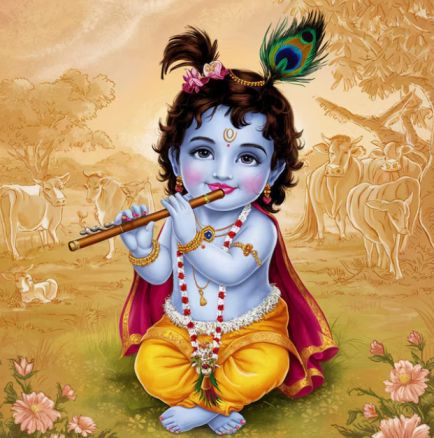
After the bath, the deity is dressed in new, vibrant silken clothes and adorned with jewelry, a crown, and a peacock feather. The idol is then placed in a beautifully decorated cradle (Jhoola). Every member of the family or temple takes a turn to gently rock the cradle, welcoming the newborn Lord into their home and heart.
4. Bhog and Aarti
A grand “Bhog” consisting of Krishna’s favorite foods is offered. This includes fresh butter (Makhan), rock sugar (Mishri), milk-based sweets, and “Panjiri” (a traditional dish made of coriander seeds and sugar). The ceremony concludes with a melodious “Aarti,” accompanied by the blowing of conch shells and the ringing of bells.
Regional Celebrations: How India Celebrates Janmotsav
The beauty of Lord Krishna Janmashtami lies in its diversity. Different regions of India have unique and colorful ways of expressing their devotion.
Mathura and Vrindavan: The Heartland of Devotion
In the birthplace of Krishna, the celebrations are unparalleled. Thousands of pilgrims flock to the Krishna Janmabhoomi temple in Mathura and the Banke Bihari temple in Vrindavan. The entire city is illuminated, and “Ras Leela” performances (dramatic enactments of Krishna’s life) are held in every corner. The atmosphere is thick with the fragrance of flowers and the chanting of “Radhe Radhe!”
Maharashtra: The Thrill of Dahi Handi
In cities like Mumbai and Pune, the focus is on the playful side of Krishna. Dahi Handi involves groups of young men, called “Govindas,” forming massive human pyramids to reach and break an earthen pot filled with curd and butter hung high above the streets. This tradition commemorates Krishna’s childhood habit of stealing butter from high-hanging pots.
South India: Welcoming the Little Krishna
In states like Tamil Nadu and Karnataka, people draw small footprints of baby Krishna using rice flour paste, starting from the entrance of the house and leading up to the puja room. This signifies that the Lord has entered their home. Special sweets like “Seedai” and “Murukku” are prepared as offerings.
Gujarat: The Majesty of Dwarka
At the Dwarkadhish Temple in Dwarka, Gujarat, Krishna is worshipped as the “Dwarkadhish” or the King of Dwarka. The celebration here is one of the most majestic in the world. The temple, which is over 2,500 years old, is adorned with gold, diamonds, and precious emeralds. Thousands of devotees stand in long queues to have a midnight “Darshan” of the Lord. The unique aspect here is the elaborate dressing of the deity in royal attire, reflecting the splendor of Krishna’s adult life.
Orissa and Bengal: A Devotional Experience
In states like Orissa and West Bengal, Lord Krishna Janmashtami is celebrated with night-long kirtans and the reading of the Shrimad Bhagavatam. In Puri, the Jagannath Temple holds special ceremonies where Krishna is worshipped as Jagannatha. The air is filled with the sounds of bells, drums (Mridangas), and cymbals, creating a truly immersive spiritual experience. In many Bengali households, “Bal Gopal” is treated as a member of the family, and special homemade sweets like “Sandesh” and “Mishti Doi” are prepared.
How to Celebrate Lord Krishna Janmashtami at Home
You don’t need to be in a temple to experience the magic of Lord Krishna Janmashtami. Here is a step-by-step guide to celebrating at home in 2026:
- Preparation: Clean your puja room and decorate it with fresh flowers, garlands, and colorful rangoli. If you have a small cradle, decorate it with silk cloth and fairy lights.
- Sankalp: In the morning, take a bath and take a vow (Sankalp) to observe the day with devotion and purity.
- Fasting: Follow a fast that suits your health. Engage your mind in listening to “Krishna Bhajans” or reading stories from the Shrimad Bhagavatam throughout the day.
- The Midnight Puja: At midnight, perform the Abhishek of your “Ladoo Gopal” idol. Dress him in new clothes and place him in the cradle.
- Chanting: Spend time chanting the Maha Mantra: “Hare Krishna, Hare Krishna, Krishna Krishna, Hare Hare / Hare Rama, Hare Rama, Rama Rama, Hare Hare”.
- Prasad: Prepare a simple “Bhog” of butter and sugar candy. Offer it to the Lord and then share it with your family as sacred prasad.
The Global Influence: Janmashtami and ISKCON
The message of Lord Krishna Janmashtami has reached every corner of the world, largely due to the efforts of the International Society for Krishna Consciousness (ISKCON). In major cities across the US, UK, Australia, and Europe, Janmashtami is celebrated with grand festivals that attract thousands of people from all backgrounds.
At ISKCON temples, the celebration includes day-long kirtans, lectures on the Bhagavad Gita, and elaborate midnight ceremonies. The “midnight abhishekam” is often a grand spectacle, broadcast to millions online. This global celebration shows that Krishna’s message of love, peace, and Dharma is universal and timeless.
Spiritual Lessons from Janmashtami
Beyond the festivities, Lord Krishna Janmashtami offers profound lessons for our daily lives:
- Surrender (Sharanagati): Just as the people of Vrindavan surrendered to Krishna during the storms, we are reminded to surrender our worries to the Divine.
- Joy in Action: Krishna’s “Leelas” teach us that life should be lived with enthusiasm and a sense of playfulness, even in the face of challenges.
- Duty without Attachment: The teacher of the Gita reminds us on his birthday that our primary duty is to act righteously without being obsessed with the results.
Conclusion: Welcoming the Lord of Bliss
Lord Krishna Janmashtami is more than just a date on the calendar; it is an invitation to welcome the Divine into our lives. As we approach September 4, 2026, let us prepare not just our homes, but our hearts. Whether you are fasting, dancing in a kirtan, or simply rocking a small cradle at midnight, remember that the Lord is born wherever there is love and devotion.
May the blessings of Lord Krishna Janmashtami bring peace, prosperity, and spiritual awakening to you and your family. Let the birth of the “Makhan Chor” be the beginning of a new chapter of joy and Dharma in your life.
Jai Shri Krishna! Happy Janmashtami!
Read also Lord hanuman