
Introduction: Unveiling the Sacredness of Dwadash Jyotirling Stotra
In Hindu spirituality, Lord Shiva holds a place of unparalleled reverence. He is the destroyer of evil, the guardian of devotees, and the embodiment of infinite consciousness. Among the many ways to worship Lord Shiva, the Dwadash Jyotirling Stotra stands as one of the most powerful and sacred. This divine hymn is dedicated to the twelve holy Jyotirlingas, which are the self-manifested forms of Lord Shiva. For thousands of years, devotees have chanted this Stotra to receive blessings, protection, and spiritual enlightenment.
In this comprehensive guide, we will explore the complete Dwadash Jyotirling Stotra. First, we will delve into the profound Dwadash Jyotirling Stotra meaning. Second, we will provide the Stotra in Sanskrit with English translation for global seekers. Furthermore, we will discuss the significance of each of the 12 Jyotirlingas and their divine stories. We will also cover the incredible benefits of chanting Dwadash Jyotirling Stotra daily. Whether you are a seasoned devotee or a curious beginner, this article will illuminate your path. Prepare to experience the transformative energy of Lord Shiva’s sacred lights.
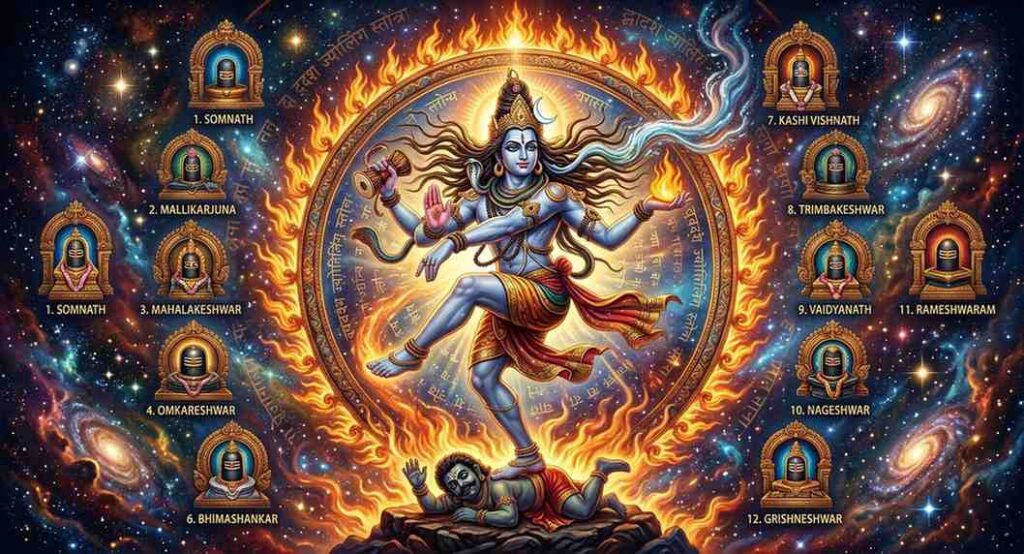
What is Dwadash Jyotirling Stotra?
The Dwadash Jyotirling Stotra originates from ancient Hindu scriptures like the Shiva Purana. It is composed in the Sanskrit language. The term “Dwadash” means twelve, and “Jyotirlinga” means pillar of light. The Stotra consists of verses that pay homage to each of the twelve sacred Jyotirlingas. These Jyotirlingas are self-manifested forms of Lord Shiva that appeared on Earth to bless humanity.
The complete Dwadash Jyotirling Stotra is a beautiful collection of verses. Each verse describes a specific Jyotirlinga, its location, and its divine significance. By chanting these verses, devotees establish a direct connection with Lord Shiva. Consequently, they receive his blessings for health, wealth, and spiritual growth. Many people also believe that visiting all twelve Jyotirlingas in a lifetime brings complete liberation (Moksha).
The Complete Dwadash Jyotirling Stotra
Here is the complete Dwadash Jyotirling Stotra in Sanskrit, followed by its English translation:
Verse 1: Somnath Jyotirlinga (Prabhas Patan, Gujarat)
“सोमनाथं प्रभासे तु सौराष्ट्रे मलयाचलम्
महाकालं उज्जयिन्यां ओंकारं ममलेश्वरम्”
English Translation:
“First, I bow to Somnath in Prabhas Patan (Gujarat), then to Mallikarjuna on the Srisailam mountain (Andhra Pradesh). Next, I pay homage to Mahakaleshwar in Ujjain (Madhya Pradesh) and to Omkareshwar in Mamaleshwar (Madhya Pradesh).”
Verse 2: Kedarnath and Bhimashankar Jyotirlingas
“केदारं हिमालये तु भीमशंकरं पुण्ये
विश्वनाथं काशी तु त्र्यम्बकं गौतमी तटे”
English Translation:
“Then, I worship Kedarnath in the Himalayas (Uttarakhand) and Bhimashankar in the sacred forest (Maharashtra). Next, I bow to Vishwanath in Kashi (Varanasi, Uttar Pradesh) and to Tryambakeshwar on the banks of the Godavari (Maharashtra).”
Verse 3: Rameshwaram, Nageshwar, and Grishneshwar Jyotirlingas
“रामेश्वरं रामेश्वरे तु नागेशं द्वारकायाम
घृष्णेशं शैवले तु घृष्णेशं गौतमी तटे”
English Translation:
“Then, I pay homage to Rameshwaram in Rameshwaram (Tamil Nadu) and to Nageshwar in Dwarka (Gujarat). Finally, I worship Grishneshwar (also known as Ghushmeshwar) near Ellora (Maharashtra).”
Verse 4: Final Prayer to All Jyotirlingas
“एतानि ज्योतिर्लिंगानि स्मृत्वा प्रातर्निशं
यः पठति स भक्त्या च तस्य पापं न विद्यते”
English Translation:
“One who remembers these twelve Jyotirlingas morning and evening, and chants this Stotra with devotion, all their sins are destroyed. They receive Lord Shiva’s infinite blessings.”
This full Dwadash Jyotirling Stotra is a powerful tool for spiritual practice. By chanting these verses, you align your energy with Lord Shiva’s cosmic consciousness. Consequently, your life becomes filled with peace, prosperity, and divine protection.
The 12 Sacred Jyotirlingas: Divine Stories and Significance
The Dwadash Jyotirling Stotra honors twelve self-manifested forms of Lord Shiva. Each Jyotirlinga has a unique story and significance. Let us explore them one by one:
1. Somnath Jyotirlinga (Prabhas Patan, Gujarat)
Somnath, meaning “Lord of the Moon,” is the first Jyotirlinga mentioned in the Dwadash Jyotirling Stotra. Located in Prabhas Patan, Gujarat, this temple is one of the most sacred places in India. The story goes that the Moon God (Chandra) was cursed by his father-in-law Daksha to lose his radiance. To regain his glory, Chandra worshipped Lord Shiva here. Lord Shiva appeared as Somnath and restored the Moon’s brightness. Consequently, Somnath is known for healing and restoring what is lost. The temple has been destroyed and rebuilt 17 times, yet it stands as a symbol of resilience and devotion.
2. Mallikarjuna Jyotirlinga (Srisailam, Andhra Pradesh)
Mallikarjuna, meaning “Lord of Jasmine,” is the second Jyotirlinga in the Dwadash Jyotirling Stotra. Perched on the Srisailam mountain in Andhra Pradesh, this temple is dedicated to both Lord Shiva and Goddess Parvati. The legend says that Lord Ganesha and Lord Kartikeya once fought over who should marry first. To resolve the conflict, Lord Shiva told them to circle the world three times. Kartikeya, being fast, went around the world on his peacock. Ganesha, being wise, simply circled his parents, saying that they were his entire world. Impressed by Ganesha’s devotion, Lord Shiva and Parvati manifested as Mallikarjuna here to bless all devotees.
3. Mahakaleshwar Jyotirlinga (Ujjain, Madhya Pradesh)
Mahakaleshwar, meaning “Lord of Time,” is the third Jyotirlinga in the Dwadash Jyotirling Stotra. Located in Ujjain, Madhya Pradesh, this temple is famous for its unique tradition of “Bhasma Aarti” (Ash Aarti). The story behind this Jyotirlinga is fascinating. Once, a demon named Dushana terrorized the people of Ujjain. They prayed to Lord Shiva, who appeared as Mahakaleshwar and destroyed the demon. To celebrate this victory, the priests perform the Bhasma Aarti every morning, using ash from the cremation ground. This ritual symbolizes that Lord Shiva is the master of life and death, and that all material things eventually turn to ash.
4. Omkareshwar Jyotirlinga (Mamaleshwar, Madhya Pradesh)
Omkareshwar, meaning “Lord of Om,” is the fourth Jyotirlinga in the Dwadash Jyotirling Stotra. Situated on an island in the Narmada River in Madhya Pradesh, this temple is shaped like the sacred syllable “Om.” The legend says that once, a great battle took place between the Devas (gods) and the Asuras (demons). The Devas were losing, so they prayed to Lord Shiva. Lord Shiva appeared as Omkareshwar and helped the Devas win the battle. The island’s natural shape like “Om” is considered a divine miracle. Consequently, Omkareshwar is known for bestowing victory and success to devotees.
5. Kedarnath Jyotirlinga (Kedarnath, Uttarakhand)
Kedarnath, meaning “Lord of the Field,” is the fifth Jyotirlinga in the Dwadash Jyotirling Stotra. Located in the majestic Himalayas in Uttarakhand, this temple is one of the Char Dham pilgrimage sites. The story goes that after the Mahabharata war, the Pandavas felt guilty for killing their own relatives. Lord Krishna advised them to seek Lord Shiva’s forgiveness. The Pandavas went to the Himalayas in search of Lord Shiva. Lord Shiva, not wanting to face them, took the form of a bull and disappeared into the ground. When Bhima tried to hold the bull, only the hump remained. This hump manifested as Kedarnath Jyotirlinga. Consequently, Kedarnath is known for washing away sins and granting liberation.
6. Bhimashankar Jyotirlinga (Bhimashankar, Maharashtra)
Bhimashankar, meaning “Lord of Bhima,” is the sixth Jyotirlinga in the Dwadash Jyotirling Stotra. Nestled in the Sahyadri mountains of Maharashtra, this temple is surrounded by lush green forests. The legend says that once, a demon named Bhima terrorized the region. He was the son of Kumbhakarna, brother of Ravana. Bhima performed severe penance to please Lord Brahma, who gave him a boon of immense strength. With this power, Bhima started harassing sages and devotees. To protect his devotees, Lord Shiva appeared as Bhimashankar and killed the demon. Consequently, Bhimashankar is known for destroying inner demons and granting courage.
7. Vishwanath Jyotirlinga (Varanasi, Uttar Pradesh)
Vishwanath, meaning “Lord of the Universe,” is the seventh Jyotirlinga in the Dwadash Jyotirling Stotra. Located in Varanasi (Kashi), Uttar Pradesh, this temple is one of the holiest places in India. The story says that Lord Brahma and Lord Vishnu once argued about who was the supreme deity. To settle the dispute, Lord Shiva appeared as a massive pillar of light stretching from heaven to earth. He challenged them to find the beginning or end of the pillar. Brahma took the form of a swan and flew upwards, while Vishnu took the form of a boar and dug downwards. Neither could find the end. Finally, they accepted Lord Shiva as the supreme deity. The place where this pillar appeared is Varanasi, and Lord Shiva manifested as Vishwanath here. Consequently, dying in Varanasi and having the last rites performed near Vishwanath is believed to grant instant liberation.
8. Tryambakeshwar Jyotirlinga (Tryambakeshwar, Maharashtra)
Tryambakeshwar, meaning “Lord with Three Eyes,” is the eighth Jyotirlinga in the Dwadash Jyotirling Stotra. Situated near Nashik in Maharashtra, this temple is the source of the Godavari River. The legend says that Sage Gautama once accidentally killed a cow. To atone for this sin, he worshipped Lord Shiva and requested the Ganga to wash his ashram. Lord Shiva appeared as Tryambakeshwar and released the Ganga from his hair, which became the Godavari. Consequently, Tryambakeshwar is known for purification and atonement. The temple is also famous for the Kumbh Mela, which is held here every 12 years.
9. Rameshwaram Jyotirlinga (Rameshwaram, Tamil Nadu)
Rameshwaram, meaning “Lord of Rama,” is the ninth Jyotirlinga in the Dwadash Jyotirling Stotra. Located on Rameshwaram island in Tamil Nadu, this temple is one of the Char Dham pilgrimage sites. The story comes from the Ramayana. After killing Ravana, Lord Rama felt guilty for killing a Brahmin. To atone for this, he decided to install a Shivalinga here. Lord Hanuman was sent to bring a Shivalinga from the Himalayas. However, Hanuman was delayed. Sita, being resourceful, made a Shivalinga from sand and Rama installed it. This sand Shivalinga is the Rameshwaram Jyotirlinga. When Hanuman returned, he was disappointed that his Shivalinga was not installed. To please Hanuman, Rama installed Hanuman’s Shivalinga next to Rameshwaram and said that anyone who worships Rameshwaram must first worship Hanuman’s Shivalinga. Consequently, Rameshwaram is known for removing guilt and granting success in all endeavors.
10. Nageshwar Jyotirlinga (Dwarka, Gujarat)
Nageshwar, meaning “Lord of Serpents,” is the tenth Jyotirlinga in the Dwadash Jyotirling Stotra. Situated near Dwarka in Gujarat, this temple is dedicated to Lord Shiva as the protector of snakes. The legend says that once, a demon named Daruka terrorized the region. He was a devotee of Goddess Parvati and had received a boon that he could not be killed by any human. Daruka started capturing devotees of Lord Shiva and torturing them. A devotee named Supriya was among the prisoners. He taught all the other prisoners to chant the Dwadash Jyotirling Stotra and worship Lord Shiva. When Daruka saw this, he got angry and tried to kill Supriya. Lord Shiva appeared as Nageshwar and killed Daruka. Consequently, Nageshwar is known for protection from enemies and granting courage in difficult times.
11. Grishneshwar (Ghushmeshwar) Jyotirlinga (Ellora, Maharashtra)
Grishneshwar, also known as Ghushmeshwar, meaning “Lord of Compassion,” is the eleventh Jyotirlinga in the Dwadash Jyotirling Stotra. Located near the Ellora Caves in Maharashtra, this temple is the last of the twelve Jyotirlingas to be mentioned in the Stotra. The legend says that a Brahmin named Sudharma and his wife Ghushma were devotees of Lord Shiva. They had no children, which made them sad. Ghushma prayed to Lord Shiva every day by making 101 Shivalingas from mud, worshipping them, and then immersing them in the nearby lake. One day, Lord Shiva appeared to her in a dream and asked her what boon she wanted. Ghushma requested that Lord Shiva manifest himself in their village to bless all devotees. Lord Shiva agreed and appeared as Grishneshwar Jyotirlinga. Consequently, Grishneshwar is known for granting wishes and bringing happiness to childless couples.
These twelve Jyotirlingas are not just religious sites. They are living embodiments of Lord Shiva’s divine energy. By chanting the Dwadash Jyotirling Stotra and visiting these sacred places, you can experience Lord Shiva’s infinite blessings.

The Profound Benefits of Chanting Dwadash Jyotirling Stotra
The Dwadash Jyotirling Stotra is not just a collection of verses. It is a powerful spiritual tool that can transform your life in many ways. Here are the incredible benefits of chanting this Stotra daily:
1. Complete Protection from Negative Energies
Lord Shiva is the destroyer of evil. By chanting the Dwadash Jyotirling Stotra, you create a protective shield around yourself. This shield keeps away negative energies, evil eyes, and malicious intentions. Many devotees have reported feeling safer and more secure after starting this practice.
2. Relief from Sins and Past Karmas
The complete Dwadash Jyotirling Stotra has the power to wash away all your sins. It is believed that chanting this Stotra with devotion can clear the karmic debt of many lifetimes. Consequently, you experience a sense of lightness and freedom from guilt.
3. Good Health and Well-being
Lord Shiva is known as the great healer. The vibrations of the Dwadash Jyotirling Stotra have a positive effect on your physical and mental health. Regular practice can help with stress-related illnesses, anxiety, and chronic health issues. Many people have reported improved energy levels and better sleep after chanting this Stotra.
4. Wealth and Prosperity
Lord Shiva is also the bestower of wealth. By chanting the Dwadash Jyotirling Stotra, you attract abundance into your life. It helps remove obstacles in your career and business. Many devotees have seen financial growth and stability after consistent practice.
5. Spiritual Growth and Enlightenment
The ultimate goal of human life is spiritual enlightenment. The Dwadash Jyotirling Stotra helps you move closer to this goal. It purifies your mind, increases your focus, and deepens your connection with Lord Shiva. With time, you experience inner peace and a sense of purpose in life.
6. Happy Family Life
Lord Shiva is the ideal family man, along with Goddess Parvati, Lord Ganesha, and Lord Kartikeya. By chanting the Dwadash Jyotirling Stotra, you can improve your family relationships. It brings harmony, love, and understanding into your home. Many couples have reported better communication and reduced conflicts after practicing this Stotra.
7. Victory Over Enemies and Obstacles
Life is full of challenges. The Dwadash Jyotirling Stotra gives you the strength to face and overcome these challenges. It helps you defeat your enemies, both internal and external. Whether you are facing competition at work or personal struggles, this Stotra gives you the courage to move forward.
These are just a few of the many benefits of the Dwadash Jyotirling Stotra. The key is to chant it with devotion, consistency, and a pure heart. Over time, you will see positive changes in every aspect of your life.
How to Chant Dwadash Jyotirling Stotra: A Step-by-Step Guide
Chanting the Dwadash Jyotirling Stotra is simple, but following a few guidelines can enhance its power. Here is a step-by-step guide:
1. Choose the Right Time
The best time to chant the Dwadash Jyotirling Stotra is in the morning, before sunrise, or in the evening, after sunset. These are the “Sandhya Kaal” (transition periods) when the spiritual energy is highest.
2. Prepare Your Space
Find a quiet and clean place in your home. Light a diya (oil lamp) and some incense sticks. Place a picture or idol of Lord Shiva in front of you. This creates a sacred atmosphere for your practice.
3. Sit in a Comfortable Posture
Sit in a cross-legged position like Sukhasana or Padmasana. Keep your back straight and your head relaxed. Place your hands on your knees in Dhyana Mudra (meditation gesture).
4. Begin with Prayers
Start by invoking Lord Ganesha to remove any obstacles. Then, chant “Om Namah Shivaya” a few times to establish a connection with Lord Shiva.
5. Chant the Stotra with Devotion
Now, chant the complete Dwadash Jyotirling Stotra slowly and clearly. Pay attention to each word and its meaning. Visualize each Jyotirlinga in your mind as you chant its name.
6. Focus on the Feeling
As you chant, feel the energy of Lord Shiva flowing through you. Surrender your worries and fears to him. Let the vibrations of the Stotra purify your mind and soul.
7. End with Gratitude
After completing the Stotra, thank Lord Shiva for his blessings. Spend a few minutes in silence, meditating on his divine form.
8. Be Consistent
Consistency is the key to success. Try to chant the Dwadash Jyotirling Stotra every day at the same time. Even if you can only chant it once a day, do it with devotion. Over time, you will see the benefits.
By following these steps, your practice of the Dwadash Jyotirling Stotra will become more powerful and meaningful.
2026: Why Dwadash Jyotirling Stotra is More Relevant Than Ever
In 2026, the world is becoming faster, more stressful, and more chaotic. People are struggling with anxiety, depression, and a sense of disconnection. In this situation, the Dwadash Jyotirling Stotra is more relevant than ever. It is a spiritual anchor that can help you navigate through these turbulent times.
Here are a few reasons why 2026 is a great year to start chanting the Dwadash Jyotirling Stotra:
- Mental Health Crisis: The post-pandemic world is facing a mental health crisis. The Dwadash Jyotirling Stotra provides a natural way to reduce stress and anxiety. It calms the mind and brings inner peace.
- Social Media Overload: Social media has made us more connected, but also more isolated. The Dwadash Jyotirling Stotra helps you disconnect from the digital world and reconnect with your inner self.
- Uncertainty About the Future: The world is changing rapidly, and many people are uncertain about the future. The Dwadash Jyotirling Stotra gives you a sense of stability and hope. It reminds you that there is a divine plan, and you are not alone.
- Rise in Spiritual Seekers: More and more people are turning to spirituality for answers. The Dwadash Jyotirling Stotra is a perfect practice for these seekers. It is simple, powerful, and accessible to everyone.
In 2026, make the Dwadash Jyotirling Stotra a part of your daily routine. Let Lord Shiva’s sacred lights guide you through the darkness. Let his divine energy fill your life with peace, prosperity, and happiness.
Conclusion: Embrace the Sacred Lights of Lord Shiva
As we conclude this ultimate guide, remember that the Dwadash Jyotirling Stotra is a living tradition. It is not just words on a page. It is a direct connection to Lord Shiva’s infinite consciousness. Whether you seek the Dwadash Jyotirling Stotra meaning for intellectual curiosity or spiritual growth, the twelve sacred Jyotirlingas will guide you.
By chanting the complete Dwadash Jyotirling Stotra daily, you invite Lord Shiva’s divine energy into your soul. You overcome ignorance and embrace wisdom. Let the vibrations of this sacred hymn resonate in your heart. In 2026, as the world becomes faster and more stressful, this ancient practice is more relevant than ever.
May Lord Shiva’s twelve sacred lights illuminate your path. May his blessings protect you, guide you, and fill your life with joy. Om Namah Shivaya!
Frequently Asked Questions (FAQs)
1. What is Dwadash Jyotirling Stotra?
The Dwadash Jyotirling Stotra is a sacred hymn dedicated to the twelve self-manifested forms of Lord Shiva, known as Jyotirlingas. Each verse pays homage to one Jyotirlinga, its location, and its divine significance.
2. What are the benefits of chanting Dwadash Jyotirling Stotra?
Chanting the Dwadash Jyotirling Stotra daily provides complete protection from negative energies, relief from sins and past karmas, good health, wealth and prosperity, spiritual growth, happy family life, and victory over enemies and obstacles.
3. Which are the 12 Jyotirlingas?
The 12 Jyotirlingas are: Somnath (Gujarat), Mallikarjuna (Andhra Pradesh), Mahakaleshwar (Madhya Pradesh), Omkareshwar (Madhya Pradesh), Kedarnath (Uttarakhand), Bhimashankar (Maharashtra), Vishwanath (Uttar Pradesh), Tryambakeshwar (Maharashtra), Rameshwaram (Tamil Nadu), Nageshwar (Gujarat), and Grishneshwar (Maharashtra).
4. What is the best time to chant Dwadash Jyotirling Stotra?
The best time to chant the Dwadash Jyotirling Stotra is in the morning, before sunrise, or in the evening, after sunset. These are the “Sandhya Kaal” (transition periods) when spiritual energy is highest.
5. Can I chant Dwadash Jyotirling Stotra without visiting all 12 Jyotirlingas?
Yes, you can. While visiting all 12 Jyotirlingas is considered very auspicious, chanting the Dwadash Jyotirling Stotra with devotion has the same spiritual benefits. Lord Shiva resides in the hearts of his devotees, and you can connect with him anywhere.
Disclaimer: This article is for informational and spiritual education purposes only. Please verify the information with trusted sources before acting on it.
Read more information click here