
The Ayodhya Ram Mandir, a magnificent testament to faith, resilience, and architectural brilliance, stands proudly at the sacred Ram Janmabhoomi in Ayodhya, Uttar Pradesh. Since its historic consecration (Prana Pratishtha) on January 22, 2024, the temple has become a global spiritual epicenter, attracting millions of devotees from every corner of the world. In 2026, with the completion of the entire temple complex and the surrounding infrastructure, the experience of visiting the Ayodhya Ram Mandir has reached new heights of divinity and convenience. This comprehensive guide provides everything you need to plan your pilgrimage, from darshan timings and online bookings to the deep historical and architectural significance of this sacred shrine.

1. The Significance of Ayodhya Ram Mandir
For Hindus, Ayodhya Ram Mandir is not just a structure of stone and marble; it is the fulfillment of a centuries-old dream. Ayodhya is traditionally recognized as the birthplace of Lord Shri Ram, the seventh avatar of Lord Vishnu and the central figure of the epic Ramayana. The temple represents the restoration of Dharma and the spiritual awakening of a nation.
The Heart of Sanatana Dharma
The temple site, known as Ram Janmabhoomi, is considered one of the holiest places on Earth. Devotees believe that a visit to the Ayodhya Ram Mandir and a dip in the holy Saryu River can cleanse the soul and lead to spiritual liberation. The temple stands as a symbol of cultural identity and the enduring legacy of Lord Ram’s teachings on righteousness, sacrifice, and duty.
2. Architecture and Design of the Temple
The Ayodhya Ram Mandir is a masterpiece of the Nagara style of temple architecture, common to Northern India. Designed by the renowned Sompura family, who have been temple architects for 15 generations, the temple is built to last for over 1,000 years without the use of iron or steel.
Nagara Style and Structural Features
The temple is 380 feet long, 250 feet wide, and reaches a majestic height of 161 feet. It features three stories, each 20 feet high, supported by a total of 392 pillars and 44 ornate doors. The use of pink Bansi Paharpur sandstone from Rajasthan gives the temple its distinctive and divine glow.
The Five Mandapas
The Ayodhya Ram Mandir includes five grand halls or mandapas:
- Nritya Mandap: The hall for dance and cultural performances.
- Rang Mandap: A vibrant hall for celebrations and rituals.
- Sabha Mandap: The assembly hall for devotees.
- Prarthana Mandap: The dedicated prayer hall.
- Kirtan Mandap: A space for devotional singing and chanting.
The Garbhagriha and Ram Lalla Idol
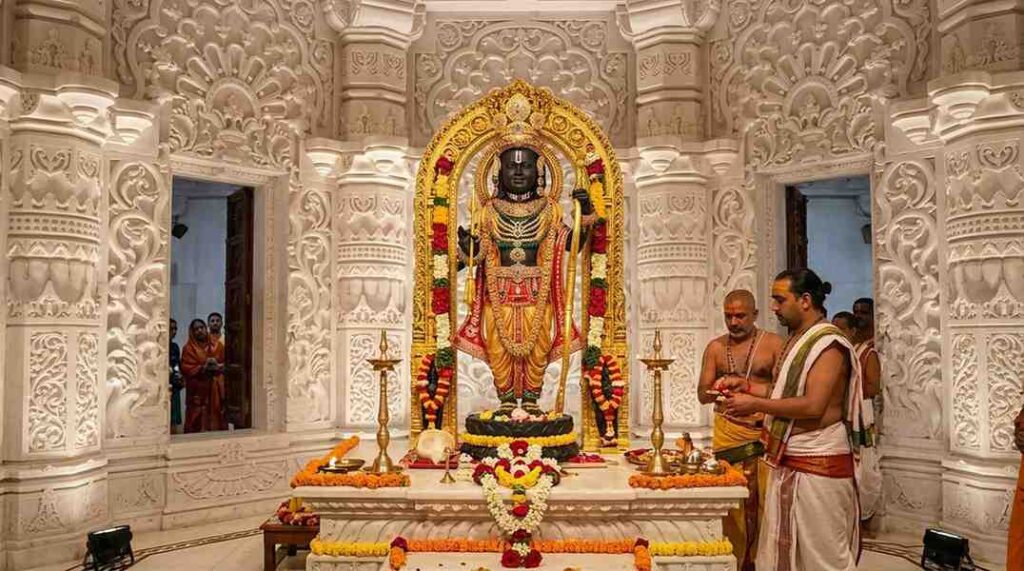
At the heart of the temple is the Garbhagriha (Sanctum Sanctorum), which houses the divine idol of Ram Lalla—the infant form of Lord Ram. Sculpted by Arun Yogiraj from a 2.5-billion-year-old black stone (Shaligram), the 51-inch idol captures the innocent yet majestic essence of the five-year-old deity. The intricate carvings on the pillars depict various incarnations of Lord Vishnu and scenes from the Ramayana.
3. History of the Ram Janmabhoomi Dispute and Resolution
The journey to the construction of the Ayodhya Ram Mandir is one of the longest and most significant legal and social chapters in Indian history.
Historical Context
The site was originally home to a grand temple that was demolished in the 16th century to build the Babri Masjid. For centuries, Hindus continued to worship at the site, leading to a long-standing dispute. After decades of legal battles, the Supreme Court of India delivered a historic and unanimous verdict on November 9, 2019, granting the entire 2.77-acre disputed land for the construction of the Ram Mandir.
The Construction Phase
The Shri Ram Janmabhoomi Teerth Kshetra Trust was formed to oversee the construction. The Bhumi Pujan was performed by Prime Minister Narendra Modi on August 5, 2020. The construction utilized modern technology alongside ancient techniques, ensuring that the Ayodhya Ram Mandir remains a marvel of engineering and spirituality.
4. How to Plan Your Visit: Darshan Timings and Booking (2026)
In 2026, visiting the Ayodhya Ram Mandir has become highly organized to accommodate the millions of pilgrims who arrive daily.
Darshan Timings
The temple is generally open for devotees from early morning until late at night.
- Morning Session: 6:30 AM to 12:00 PM
- Afternoon Session: 2:00 PM to 10:00 PM
Note: The temple may remain closed for a short duration in the afternoon for the deity’s rest.
Aarti Timings
Attending an Aarti at the Ayodhya Ram Mandir is a soul-stirring experience.
- Shringar Aarti: 6:30 AM
- Bhog Aarti: 12:00 PM
- Sandhya Aarti: 7:30 PM
Passes for these Aartis can be booked online through the official website.
Online Booking for Sugam Darshan
To avoid long queues, the temple trust offers Sugam Darshan (Easy Darshan) passes. These can be booked for free on the official website: srjbtkshetra.org. Devotees are assigned a specific time slot, significantly reducing wait times. Ensure you carry a valid photo ID (Aadhar Card, Voter ID, etc.) for verification at the entry gates.

5. Major Festivals and Special Occasions
The Ayodhya Ram Mandir celebrates Hindu festivals with unmatched fervor, making these times ideal for a visit if you wish to witness the temple in its full glory.
Ram Navami
The birth anniversary of Lord Ram is the biggest festival in Ayodhya. In 2026, millions of devotees are expected to witness the Surya Tilak ceremony, where the sun’s rays are directed to fall precisely on the forehead of the Ram Lalla idol.
Deepotsav (Diwali)
Ayodhya is the birthplace of the Diwali tradition. During the festival of lights, the entire city and the Ayodhya Ram Mandir complex are illuminated with millions of earthen lamps (diyas), creating a celestial atmosphere that must be seen to be believed.
Vivah Panchami
This festival commemorates the wedding of Lord Ram and Goddess Sita. The celebrations involve grand processions and traditional rituals that showcase the rich cultural heritage of the region.
6. Nearby Attractions in Ayodhya
While the Ayodhya Ram Mandir is the primary destination, the city offers several other sacred sites that complete the pilgrimage.
Hanuman Garhi
Tradition dictates that one should visit Hanuman Garhi before going to the Ram Mandir. This 10th-century temple is dedicated to Lord Hanuman, the ultimate devotee and guardian of Ayodhya. A climb of 76 steps leads to the shrine, offering a panoramic view of the city.
Kanak Bhawan
A beautiful palace-temple gifted to Goddess Sita by Queen Kaikeyi. The golden idols of Ram and Sita here are mesmerizing.
Saryu River and Ram Ki Paidi
A holy dip in the Saryu River is essential for many pilgrims. The evening Aarti at the Saryu Ghats is a tranquil and meditative experience.
7. How to Reach Ayodhya (2026 Update)
Ayodhya is now one of the most well-connected cities in India, thanks to massive infrastructure projects.
- By Air: The Maharishi Valmiki International Airport (AYO) is now fully operational, with direct flights from major cities like Delhi, Mumbai, Bangalore, and Ahmedabad.
- By Rail: The Ayodhya Dham Junction has been modernized into a world-class railway station, connected by Vande Bharat and Amrit Bharat expresses to all parts of the country.
- By Road: Ayodhya is situated on the NH-27, with excellent road connectivity to Lucknow (135 km), Varanasi (200 km), and Gorakhpur (140 km).
8. Travel Tips for Pilgrims
- Dress Code: While there is no strict dress code, devotees are encouraged to wear traditional and modest clothing.
- Prohibited Items: Mobile phones, cameras, and electronic gadgets are generally not allowed inside the main temple. Safe locker facilities are available at the Pilgrim Facilitation Center.
- Footwear: You will need to remove your footwear before entering the temple complex. Dedicated shoe stands are available.
- Best Time to Visit: October to March offers the most pleasant weather. For shorter crowds, consider visiting on weekdays.
9. Conclusion: The Eternal Grace of Ram Lalla
The Ayodhya Ram Mandir is more than a destination; it is an experience of divine grace and historical triumph. Whether you are a devout seeker or a traveler interested in architecture and history, a visit to this sacred shrine offers a sense of peace and wonder that stays with you long after you leave. As the temple continues to inspire millions, it stands as a timeless beacon of the values that Lord Ram embodied—truth, compassion, and righteousness.
Plan your journey to the Ayodhya Ram Mandir today and witness the glory of the Raghunath in his eternal home. Jai Shri Ram!
Disclaimer: This article is for informational purposes. For official bookings and the latest updates, always visit the official website of the Shri Ram Janmabhoomi Teerth Kshetra Trust.