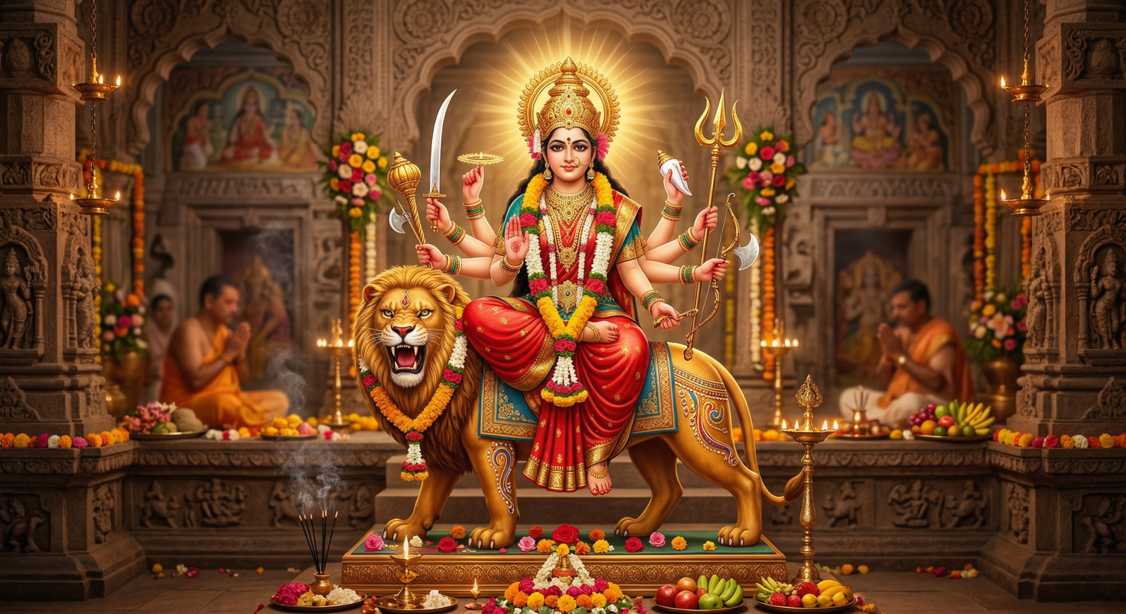
The Divine Essence of Durga Maa
In the vast and colorful landscape of Hindu spirituality, few deities are as universally beloved and revered as Goddess Durga. Known as the “Invincible One,” she is the supreme manifestation of Shakti, the divine feminine energy that powers the universe. For millions of devotees, Durga Maa is the compassionate mother who protects her children from the forces of evil. Furthermore, she is the warrior goddess who fearlessly battles the demons of ego, ignorance, and injustice. As we navigate the complexities of 2026, her presence is more relevant than ever. Consequently, she offers a beacon of hope and a path to inner strength and resilience.
Whether you are seeking the grace of Sherawali Mata for protection or looking to understand the deep spiritual meaning of the 9 Durga forms, this guide is for you. In fact, we will explore the miraculous story of her birth from the collective light of the gods. Additionally, we will decode the profound symbolism in every Durga Maa painting and idol. Finally, we will learn the correct way to celebrate Durga Puja and the significance of Durga Ashtami. By the end of this article, you will understand why she is considered the soul of the universe. Most importantly, you will see how her grace can transform your reality and bring you closer to spiritual liberation.
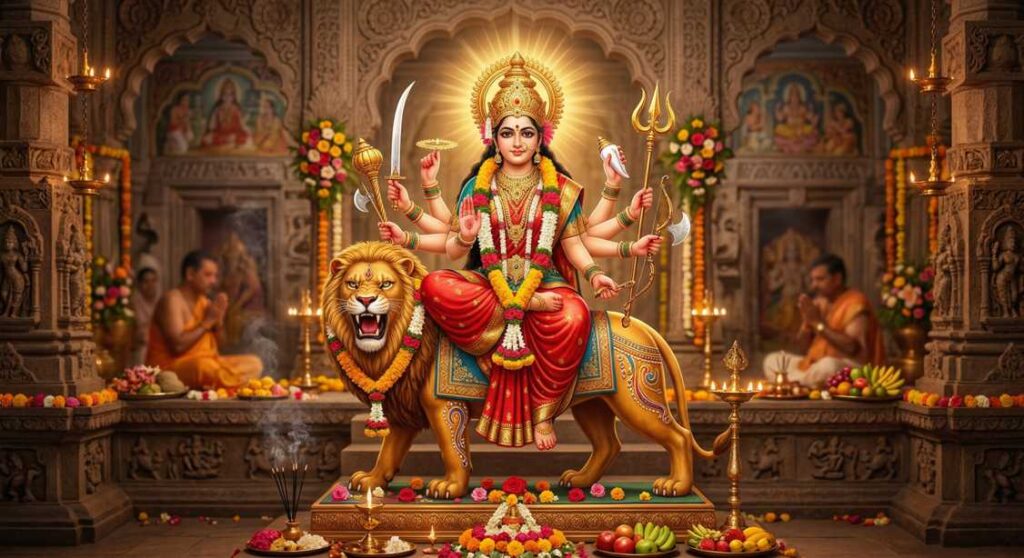
Who is Goddess Durga? The Invincible Warrior Queen
The name “Durga” is derived from the Sanskrit word “Durg,” which means a fort or a place that is difficult to reach. Therefore, she is the “Invincible One” who cannot be conquered by evil. Unlike other goddesses who represent specific virtues, Devi Durga embodies the totality of the Divine Mother’s power. She is the combined energy of all the gods, created to defeat the buffalo demon Mahishasura.
In the Shaktism tradition, she is the primary manifestation of Adi Shakti. Furthermore, she is the source of all other goddesses, including the powerful Durga and Kali. When a devotee calls out “Durga Ji” or “Devi Maa,” they address the most primordial aspect of the Mother. Consequently, she can cut through the thickest veils of illusion with her divine sword. For millions, she is the ultimate protector, often referred to as Ambe Mata or Durgamma in different parts of India.
The Iconography of Durga Maa: Decoding the Symbols
To the uninitiated, the image of Durga Maa can be overwhelming. However, every element of her iconography carries a deep spiritual lesson that every devotee should understand. When you look at Durga Maa painting or a statue in a Durga Devi temple, you will notice several consistent elements. For example:
- The Multiple Arms: Usually, she is depicted with eight or ten arms. These represent the eight directions and her ability to protect her devotees from all sides. Each hand holds a weapon or a symbol given to her by the gods.
- The Lion (Vahana): Her mount, the lion, symbolizes power, will, and determination. By riding the lion, she shows that she has mastered these qualities and uses them to destroy evil. It also represents the animalistic instincts that we must learn to control.
- The Trishula (Trident): Given by Lord Shiva, it represents the three qualities (Gunas) of nature: Sattva, Rajas, and Tamas. She is the master of all three.
- The Sudarshana Chakra: Given by Lord Vishnu, it symbolizes that she is the center of the universe and that all things revolve around her. It also represents the destruction of evil.
- The Lotus Flower: It represents the evolution of the soul. Just as a lotus grows in mud but remains unstained, she teaches us to remain pure in a materialistic world.
- The Conch (Shankha): It symbolizes the primordial sound of “Om,” the vibration of the universe. It also represents her call to battle against injustice.
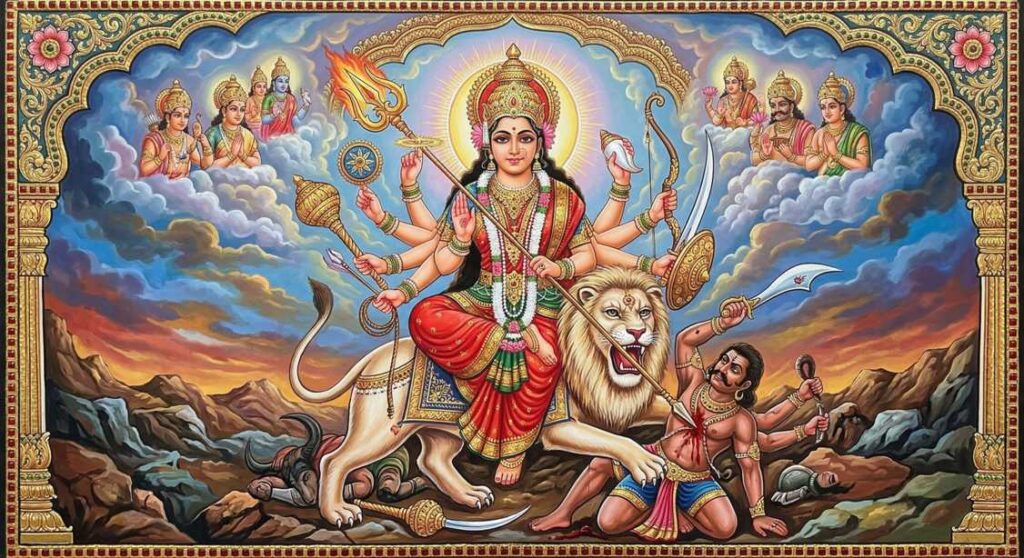
The 9 Devi of Navratri: The Forms of 9 Durga
One of the most significant aspects of her worship is the celebration of Durga Maa Navratri. During these nine nights, devotees worship nine different forms of the goddess, known as the 9 Durga or Navadurga. Each form represents a stage of spiritual evolution and a specific power of the Mother.
- Shailaputri: The daughter of the mountains. She represents the root chakra and the beginning of the spiritual journey.
- Brahmacharini: The one who practices penance. She symbolizes the quest for knowledge and the importance of discipline.
- Chandraghanta: The one who has a half-moon on her forehead. She represents peace, serenity, and the power to destroy all fears.
- Kushmanda: The creator of the universe. Her name means “the little cosmic egg,” and she is the source of all energy.
- Skandamata: The mother of Skanda (Lord Kartikeya). She represents the maternal aspect of the goddess and her role as a protector of children.
- Katyayani: The warrior daughter of Sage Katyayan. She is the one who eventually kills Mahishasura. She represents fierce courage.
- Kaalratri: The most terrifying form of the goddess. She is the destroyer of darkness and ignorance. She is often associated with the connection between Durga and Kali.
- Mahagauri: The one who is as white as a conch. She represents purity, peace, and the removal of all sins.
- Siddhidhatri: The giver of all perfections (Siddhis). She is the final form, representing the attainment of spiritual enlightenment.
Worshipping the 9 Devi of Navratri is a way for devotees to align their energy with the cosmic cycle of creation and transformation. Each day of the festival is dedicated to one of these forms, with specific colors and rituals associated with them.
Durga Puja: The Grand Celebration of Victory
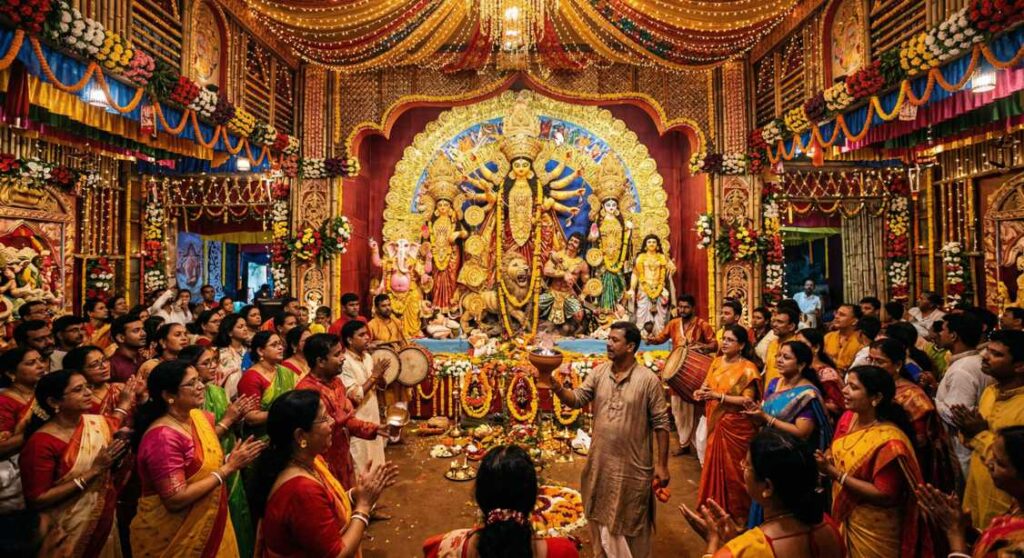
While she is worshipped throughout the year, the most grand celebration is Durga Puja. This festival commemorates the victory of Goddess Durga over the demon Mahishasura. It is a time of immense joy, devotion, and cultural expression.
Bengali Durga Puja: A Global Heritage
The Bengali Durga Puja is world-renowned for its artistic pandals, exquisite idols, and the rhythmic sound of the Dhak (traditional drum). In Kolkata, the city transforms into a massive open-air art gallery. Millions of people participate in “pandal hopping,” visiting different temporary shrines to witness the creativity of local artists. Furthermore, the rituals of “Dhunuchi Naach” and “Sindoor Khela” are integral parts of this celebration. In 2021, UNESCO inscribed Durga Puja in Kolkata on its Representative List of the Intangible Cultural Heritage of Humanity.
Durga Maa Puja at Home
You don’t need to be in a temple to connect with the Mother. Performing a Durga Maa puja at home is a beautiful way to invite her energy into your life.
- Preparation: Clean your house and the pooja area. It is believed that the Mother enters a clean and peaceful environment.
- Setting the Altar: Place a beautiful Durga maa painting or idol on a red cloth. Red is the favorite color of the goddess, symbolizing energy and power.
- Kalash Sthapana: On the first day of Navratri, many devotees perform “Ghatasthapana,” placing a pot filled with water and grains.
- Offerings: Offer red flowers, especially Hibiscus. You can also offer fruits, sweets, and coconut.
- Chanting: Chant the “Durga Chalisa” or the “Mahishasura Mardini Stotram” with full devotion.
- Aarti: Conclude the pooja with the Durga Mata puja aarti, waving a lamp in front of the idol.
Durga Ashtami: The Most Powerful Day of Navratri
Among the nine days of Navratri, Durga Ashtami (also known as Maha Ashtami) is considered the most auspicious. It falls on the eighth day of the festival. On this day, the power of the goddess is believed to be at its peak.
One of the most significant rituals performed on this day is the Sandhi Puja. This happens during the “Sandhi Kaal,” the 48-minute window where the eighth day ends and the ninth day begins. It is said that at this exact moment, Durga Maa manifested as Maha Kali to kill the demons Chanda and Munda. During this time, 108 lamps are lit, and 108 lotuses are offered to the goddess.
Additionally, many families perform “Kanya Pujan” on Durga Ashtami. Nine young girls, representing the nine forms of the goddess, are invited to the house. They are worshipped as living manifestations of the Mother, and offered food, gifts, and dakshina. This ritual highlights the importance of respecting and empowering the feminine in our society.
Durga Saptashati: The Sacred Text of the Goddess
For those who wish to go deeper into the mysteries of the Mother, the Durga Saptashati is an essential scripture. Also known as the Devi Mahatmya or Chandi Path, it is a 700-verse text found within the Markandeya Purana. It tells the stories of how the goddess defeated various demons to restore balance to the universe.
Reading or listening to the Durga Saptashati during Navratri is considered highly meritorious. Each of its 13 chapters carries a specific spiritual frequency. For example:
- Chapter 1: Deals with the destruction of Madhu and Kaitabha, representing the overcoming of lethargy and attachment.
- Chapter 2-4: Describes the battle with Mahishasura, representing the destruction of the ego.
- Chapter 5-13: Relates the battle with Shumbha and Nishumbha, representing the overcoming of pride and doubt.
The text is not just a collection of myths; it is a roadmap for the soul. It teaches us that the ultimate victory belongs to those who surrender to the Divine Mother. Many devotees chant the “Siddha Kunjika Stotram,” which is considered the key to unlocking the power of the Durga Saptashati.
Sherawali Mata and Ambe Mata: The Many Names of One Mother
Depending on where you are in India, you might hear the goddess called by different names. Each name highlights a different aspect of her personality.
- Sherawali Mata: This name is popular in North India, especially among devotees of the Vaishno Devi shrine. It literally means “The Mother who rides a lion.” It emphasizes her role as a fierce protector.
- Ambe Mata: This is a more affectionate name, meaning “The Divine Mother.” It is commonly used in Gujarat and Maharashtra during the Garba and Dandiya festivals.
- Durgamma: In South India, particularly in Andhra Pradesh and Karnataka, she is often worshipped as Durgamma. She is seen as the village protector who keeps away diseases and misfortune.
- Devi Maa: A general term used by millions to address the goddess as their own mother. It reflects the intimate and personal bond that devotees share with her.
Regardless of the name used—be it Durga Ji, Durga Maa, or Durga Mata puja—the essence remains the same. She is the one who removes all “Durgati” (misfortune) from our lives.
Durga and Kali: The Two Sides of Shakti
The relationship between Durga and Kali is one of the most fascinating aspects of Hindu mythology. While they are often seen as separate goddesses, they are ultimately two forms of the same energy.
- Durga represents the protective and constructive side of Shakti. She is the one who restores order and preserves the world.
- Kali represents the transformative and destructive side. She is the one who destroys time and the ego to pave the way for a new beginning.
In the Devi Mahatmya, Kali emerges from the forehead of Durga during the battle with Chanda and Munda. This shows that when the situation becomes extremely dire, the Mother takes her most fierce form to ensure total victory. For a deeper look at the darker aspect of the Mother, see our article on Maha Kali.
Famous Durga Devi Temples: Sites of Divine Power
Visiting a Durga devi temple is a transformative experience. India is dotted with powerful “Shakti Peethas,” places where parts of Sati’s body fell, making them charged with divine energy.
- Vaishno Devi, Katra: One of the most visited shrines in India. Millions of devotees trek up the Trikuta mountains to seek the blessings of Sherawali Mata.
- Dakshineswar Kali Temple, Kolkata: While dedicated to Kali, it is a major center for Durga worship during the puja season. It was the home of the saint Ramakrishna Paramahansa.
- Jwala Ji Temple, Himachal Pradesh: Here, the goddess is worshipped as eternal flames that emerge from the rocks. It is a unique and powerful site of worship.
- Chamundeshwari Temple, Mysore: Located on top of the Chamundi Hills, this temple commemorates the goddess’s victory over Mahishasura in the local region.
These temples are not just buildings; they are portals to the divine. Many pilgrims carry Durga maa painting or photos from these sites to keep in their home altars.
Spiritual and Material Benefits of Worshipping Durga Maa
Why is the worship of Durga maa so widespread? In fact, her blessings impact every aspect of a devotee’s life. For example:
- Removal of Fear: She provides the courage to face life’s challenges without wavering.
- Protection from Enemies: She shields her devotees from both external enemies and internal demons like anger and greed.
- Success and Prosperity: Worshipping her during Durga mata puja is believed to bring success in career and business.
- Spiritual Awakening: As the Kundalini Shakti, she is the key to unlocking higher states of consciousness.
- Healing: Many devotees believe that her grace can cure physical and mental ailments.
By chanting “durga maa durga maa” with a sincere heart, one can experience a sense of deep peace and security. She is the mother who never fails to listen to her children’s prayers.
Durga Maa in Art and Culture: From Ancient Statues to Modern Paintings
The beauty of Durga Maa has inspired artists for millennia. From the ancient rock-cut sculptures of Mahabalipuram to the vibrant Durga maa painting styles of Madhubani and Kalighat, her form is a central theme in Indian art.
- Ancient Sculptures: Many ancient temples feature “Mahishasura Mardini” panels, showing the goddess in the heat of battle. These sculptures are marvels of anatomy and expression.
- Folk Art: In rural India, women create beautiful paintings on their walls and floors (Rangoli) to welcome the goddess during festivals.
- Modern Art: Contemporary artists continue to reinterpret her form, often using it to represent female empowerment and the fight against social evils.
- Digital Art: Today, you can find millions of high-quality Durga maa photos and digital illustrations that capture her divine radiance in new ways.
Whether it’s a traditional Durga maa painting or a modern digital art piece, the goal is the same: to capture a glimpse of her infinite beauty and power.
Conclusion: Invoking the Grace of Durga Maa in 2026
As we conclude this ultimate guide, it is important to remember that Goddess Durga is not just a figure from ancient myths. She is a living reality that resides within each of us as our own inner strength and intuition. Whether you celebrate the bengali durga puja with pomp or pray quietly in your heart, her grace is always available to you.
By understanding the significance of the 9 Durga forms and the power of the Durga Saptashati, we can navigate the challenges of the modern world with grace and courage. Let us carry the spirit of Durga Maa in our hearts, standing up for what is right and protecting the vulnerable. As the chant goes, “Ya Devi Sarva Bhuteshu, Shakti Rupena Samsthita”—Salutations to the Goddess who resides in all beings in the form of power.
May Durga Ji bless you with health, wealth, and spiritual wisdom. Jai Maa Durga!
Frequently Asked Questions about Goddess Durga
1. Why does Durga Maa have 10 arms?
The 10 arms represent the 10 directions (North, South, East, West, the four corners, Up, and Down). It symbolizes that she protects the entire universe from all sides.
2. What is the difference between Durga and Kali?
Durga is the protective and preserving form of Shakti, while Kali is the fierce and transformative form. They are two sides of the same divine energy.
3. When is Durga Puja celebrated in 2026?
Durga Puja 2026 will be celebrated from October 16th to October 20th, with Maha Ashtami falling on October 18th.
4. How can I perform a simple Durga Mata puja at home?
Light a ghee lamp, offer red flowers, and chant the Durga Chalisa. The most important thing is your devotion and sincerity.
5. What are the 9 forms of Durga worshipped during Navratri?
The 9 forms (Navadurga) are Shailaputri, Brahmacharini, Chandraghanta, Kushmanda, Skandamata, Katyayani, Kaalratri, Mahagauri, and Siddhidhatri.